



EPO Protein: Target Overview, Research Applications, and Selection Guide
72 products
72 products
Erythropoietin (EPO) is a secreted glycoprotein hormone that regulates red blood cell production through interaction with the erythropoietin receptor (EPOR). It plays a central role in maintaining oxygen homeostasis by promoting erythroid cell survival and differentiation. EPO expression is primarily induced under hypoxic conditions and is tightly regulated to ensure balanced hematopoiesis.
EPO is produced mainly in the kidney in response to hypoxia and acts as a circulating ligand that regulates erythropoiesis. It is involved in:
EPO functions by binding to EPOR on erythroid progenitor cells, initiating signaling cascades that support cell survival and proliferation. In addition to its role in erythropoiesis, EPO has been implicated in tissue protection and regeneration under stress conditions. Unlike membrane-bound receptors, EPO operates as a soluble factor, making it particularly suitable for receptor-binding and functional cell-based assays.
Target Name: EPO
Synonyms: Erythropoietin
UniProt ID: P01588
Target Class: Hormone; cytokine
EPO binds to its receptor EPOR, inducing receptor dimerization and activation of JAK2, which initiates intracellular signaling. This activation triggers key downstream pathways including JAK2/STAT5, PI3K/AKT, and MAPK/ERK, regulating gene expression involved in cell survival, proliferation, and differentiation. As a result, EPO signaling promotes erythroid progenitor cell expansion and maturation, ultimately increasing red blood cell production and oxygen delivery.
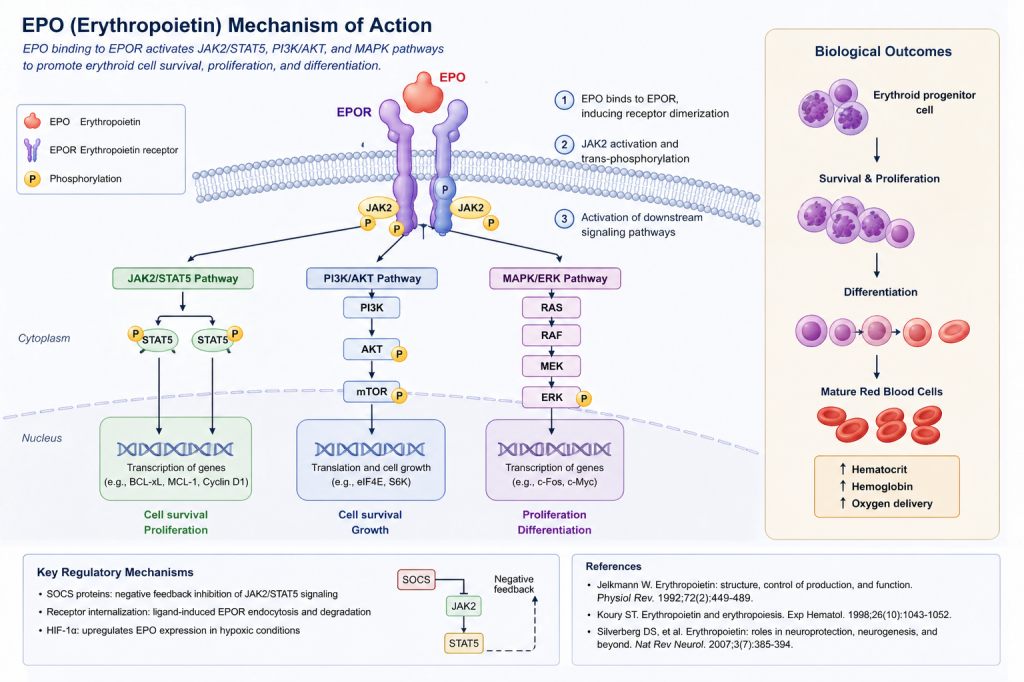
EPO is widely used in hematology and signaling studies, particularly in systems related to erythropoiesis and hypoxia.
EPO is best suited for functional and receptor-mediated assays, rather than enzymatic workflows.
Submit an inquiry or email inquiry@betalifesci.com for a customization request or bulk order quote.
Fast turnaround production is available at a affordable price point if none of our catalog products fits your desire specifications.
Selection depends on glycosylation, biological activity, and assay requirements. Proper protein choice ensures reproducible and physiologically relevant results.
If your project involves erythropoiesis studies, EPO–EPOR binding analysis, hypoxia biology, JAK/STAT signaling, or functional cell-based assays, selecting the right EPO protein format is essential for reliable and reproducible results.
We can help you:
Submit your project details for expert evaluation. Our technical team will review your application and recommend the most suitable EPO protein format for your research.
Qualified projects may be eligible for discounted or free samples for validation.
Subscribe today for the latest news and special offers.


