



FCGRN Protein: Target Overview, Research Applications, and Selection Guide
21 products
21 products
Neonatal Fc receptor (FcRn), encoded by FCGRN, is a widely expressed intracellular and cell surface receptor that regulates the recycling and transport of IgG and albumin. As an MHC class I–related molecule, FcRn binds ligands in a pH-dependent manner, playing a central role in IgG half-life extension and immune homeostasis.
FcRn is primarily localized in endosomes and on the cell surface, functioning as a recycling receptor rather than a signaling enzyme. It is involved in:
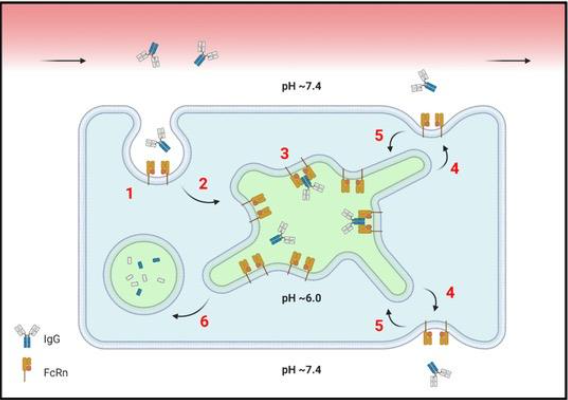
A key function is pH-dependent binding to IgG, where FcRn binds IgG at acidic pH and releases it at neutral pH, enabling recycling and preventing lysosomal degradation.
Target Name: FCGRN
Synonyms: Neonatal Fc receptor; FcRn; IgG Fc receptor
UniProt ID: P55899
Target Class: Intracellular receptor; IgG/albumin recycling receptor; MHC class I–like molecule
IgG is internalized into cells and binds FcRn in acidic endosomes (pH ~6.0). The FcRn–IgG complex is recycled to the cell surface, where IgG is released at neutral pH (~7.4), preventing degradation and extending its half-life.
FcRn is best suited for binding, transport, and pharmacokinetic studies, rather than enzyme-based assays.
FcRn proteins are most effective in binding and transport-related workflows:
Because FcRn is a recycling receptor, it is not suitable for catalytic assays, but critical for PK and antibody engineering studies.
Submit an inquiry or email inquiry@betalifesci.com for a customization request or bulk order quote.
Fast turnaround production is available at a affordable price point if none of our catalog products fits your desire specifications.
Selection depends on assay requirements such as species, pH sensitivity, and ligand type, ensuring accurate binding behavior and reproducibility.
Custom constructs are often necessary when:
If your project involves FcRn–IgG binding studies, antibody half-life evaluation, Fc engineering, albumin recycling, or pH-dependent transport assays, selecting the right FCGRN/FcRn protein format is essential for reliable and reproducible results.
We can help you:
Submit your project details for expert evaluation. Our technical team will review your application and recommend the most suitable FCGRN/FcRn protein format for your research.
Qualified projects may be eligible for discounted or free samples for validation.
Subscribe today for the latest news and special offers.


